MITSUBISHI · MITSUBISHI I CITY · Cars
MITSUBISHI I CITY Ultra-rare
As of 2026 Q2, 4 MITSUBISHI I CITYs remain registered in the UK — one of the rarest cars in Britain on today's roads. That's down from a peak of 6 in 2014 Q3 — only 67% of the high-water mark, a loss of about 2 cars. Numbers have held broadly steady over recent years rather than falling away — often the mark of a model that owners deliberately preserve. In all, the MITSUBISHI I CITY is rarer than 85% of the 2,315 UK car models we track, putting it firmly in 2026's endangered class.
Survivors over time
How rare is it?
Genuinely rare — only 4 left on UK roads.
Rarer than 85% of the 2,315 UK car models we track.
Trend
About the I CITY
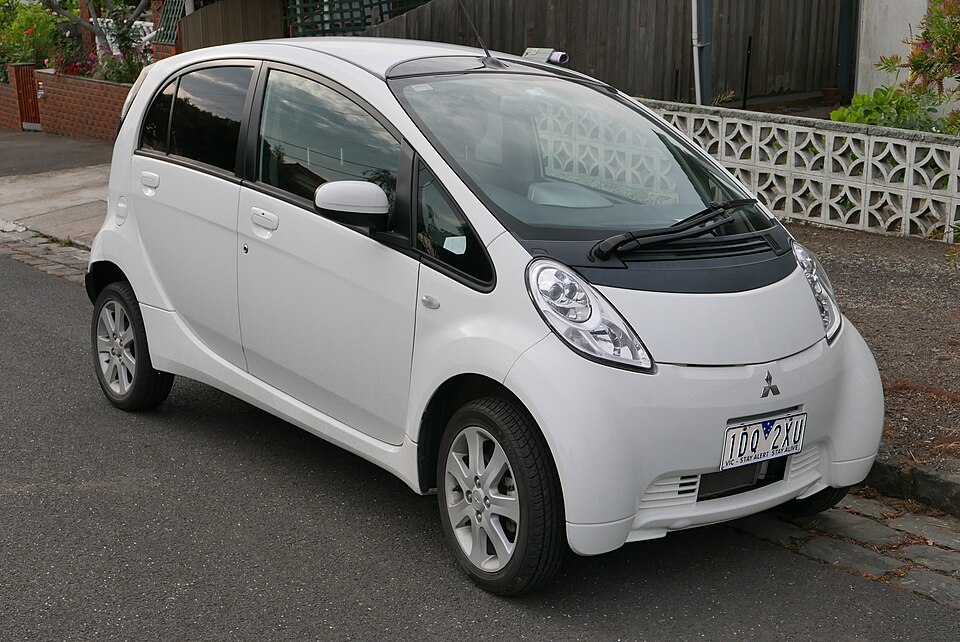
The Mitsubishi i-MiEV (MiEV is an acronym for Mitsubishi innovative Electric Vehicle) is a five-door electric city car produced in the 2010s by Mitsubishi Motors, and is the electric version of the Mitsubishi i. Rebadged variants of the i-MiEV are also sold by PSA as the Peugeot iOn and Citroën C-Zero, mainly in Europe. The i-MiEV was the world's first modern highway-capable mass production electric car. The i-MiEV was launched for fleet customers in Japan in July 2009, and on April 1, 2010, for the wider public. International sales to Asia, Australia and Europe started in 2010, with further markers...
MITSUBISHI I CITY — questions & answers
How many MITSUBISHI I CITY are left in the UK?
As of 2026 Q2, 4 MITSUBISHI I CITY were still registered in the UK — 3 licensed and on the road, plus 1 declared SORN (off-road). The figures come from official DVLA vehicle licensing data.
Is the MITSUBISHI I CITY rare?
The MITSUBISHI I CITY is genuinely rare, with only 4 left, making it rarer than 85% of the 2,315 UK car models we track.
Is the MITSUBISHI I CITY increasing or decreasing?
Over the last year the number of MITSUBISHI I CITY on UK roads held steady.
What fuel do most MITSUBISHI I CITY use?
Most MITSUBISHI I CITY run on petrol — about 100% of those still registered.
When did the MITSUBISHI I CITY peak?
The MITSUBISHI I CITY peaked at 6 registered in 2014 Q3, and was first recorded in the data in 2014 Q3.