TOYOTA · TOYOTA LITEACE · Cars
TOYOTA LITEACE Ultra-rare
As of 2026 Q2, 33 TOYOTA LITEACEs remain registered in the UK — one of the rarest cars in Britain on today's roads. That's down from a peak of 85 in 2014 Q3 — only 39% of the high-water mark, a loss of about 52 cars. They're disappearing at roughly 4 a year (12.7% of what's left), a pace that would halve the survivors by around 2031 if it held — though in practice the last, most-cherished examples tend to linger far longer. In all, the TOYOTA LITEACE is rarer than 70% of the 2,315 UK car models we track, putting it firmly in 2026's endangered class.
Survivors over time
How rare is it?
Genuinely rare — only 33 left on UK roads.
Rarer than 70% of the 2,315 UK car models we track.
Fuel breakdown
📉 Rate of decline
Disappearing at about 4 a year (12.7% of survivors). At that pace roughly 17 would remain in 5 years, and half the current fleet is gone by around ~2031.
About the LITEACE
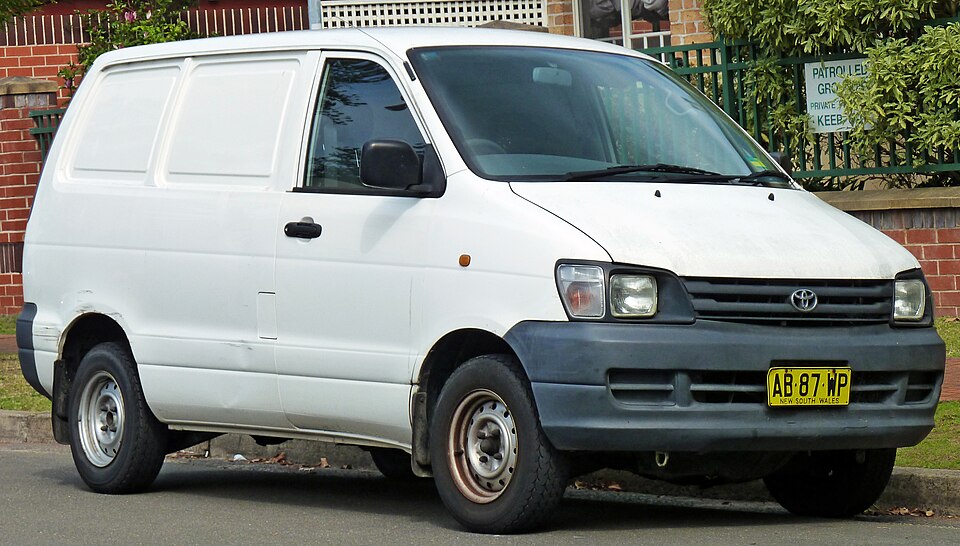
The Toyota LiteAce and TownAce are a line of light commercial and derivative passenger vans produced by the Japanese car manufacturer Toyota. These vehicles originally utilized the cab-over-engine configuration, although since 1996 a semi-cab-over arrangement has featured instead. The LiteAce launched in 1970 as light-duty truck, with commercial and van/wagon body variants added in 1971. In 1976, Toyota released the larger TownAce van/wagon that derived from the LiteAce; a TownAce truck arrived later in 1978. Between 1982 and 1992, the series accommodated the MasterAce Surf—an upscale TownAce passenger...
TOYOTA LITEACE — questions & answers
How many TOYOTA LITEACE are left in the UK?
As of 2026 Q2, 33 TOYOTA LITEACE were still registered in the UK — 9 licensed and on the road, plus 24 declared SORN (off-road). The figures come from official DVLA vehicle licensing data.
Is the TOYOTA LITEACE rare?
The TOYOTA LITEACE is genuinely rare, with only 33 left, making it rarer than 70% of the 2,315 UK car models we track.
Is the TOYOTA LITEACE increasing or decreasing?
Over the last year the number of TOYOTA LITEACE on UK roads held steady. At the current rate of decline, roughly 17 would remain in 5 years.
What fuel do most TOYOTA LITEACE use?
Most TOYOTA LITEACE run on diesel — about 73% of those still registered, with the rest split across petrol, hybrid.
When did the TOYOTA LITEACE peak?
The TOYOTA LITEACE peaked at 85 registered in 2014 Q3, and was first recorded in the data in 2014 Q3.