CHEVROLET · CHEVROLET TACUMA · Cars
CHEVROLET TACUMA Rare
As of 2026 Q2, 541 CHEVROLET TACUMAs remain registered in the UK — a genuinely rare sight on today's roads. That's down from a peak of 6,445 in 2014 Q3 — only 8% of the high-water mark, a loss of about 5,904 cars. They're disappearing at roughly 123 a year (22.7% of what's left), a pace that would halve the survivors by around 2029 if it held — though in practice the last, most-cherished examples tend to linger far longer. Tellingly, 78% are declared SORN — kept off the road in garages and barns rather than driven, the signature of a car being looked after rather than used up.
Survivors over time
How rare is it?
Rare — fewer than 1,000 remain (541 in the latest data).
Rarer than 42% of the 2,315 UK car models we track.
📉 Rate of decline
Disappearing at about 123 a year (22.7% of survivors). At that pace roughly 149 would remain in 5 years, and half the current fleet is gone by around ~2029.
About the TACUMA
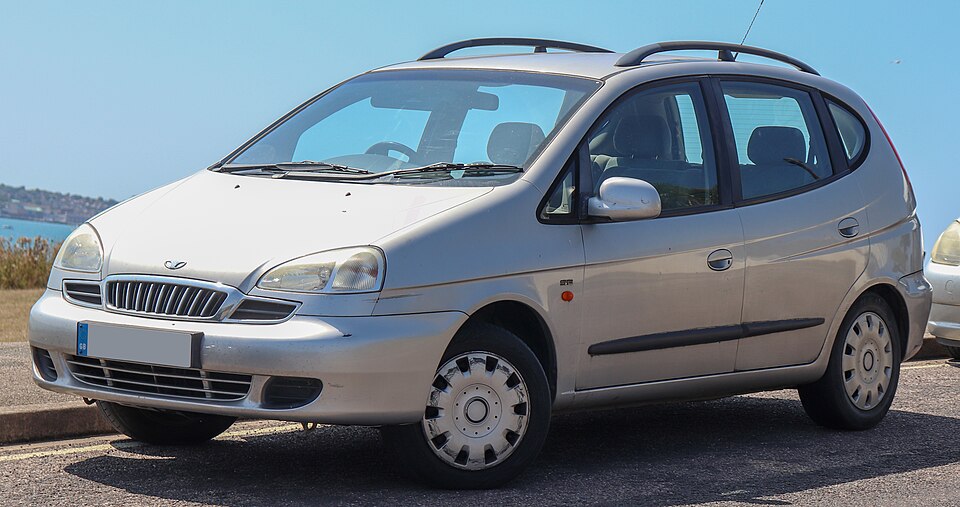
The Daewoo Tacuma (or Rezzo, Korean: 대우 레조) is a compact MPV that was produced by South Korean manufacturer Daewoo. Developed under the U100 code name, it was designed by Pininfarina and is based on the original Daewoo Nubira J100, a compact car. Following the phasing out of Daewoo as a brand in most export markets, the car was rebadged as a Chevrolet, retaining whichever model name had been used in its market. Additionally, the Chevrolet Vivant nameplate was introduced for the Singaporean, Vietnamese, South African and South American markets.
CHEVROLET TACUMA — questions & answers
How many CHEVROLET TACUMA are left in the UK?
As of 2026 Q2, 541 CHEVROLET TACUMA were still registered in the UK — 120 licensed and on the road, plus 421 declared SORN (off-road). The figures come from official DVLA vehicle licensing data.
Is the CHEVROLET TACUMA rare?
The CHEVROLET TACUMA is rare — fewer than 1,000 remain (541), making it rarer than 42% of the 2,315 UK car models we track.
Is the CHEVROLET TACUMA increasing or decreasing?
Over the last year the number of CHEVROLET TACUMA on UK roads fell by 69 (11.3%). At the current rate of decline, roughly 149 would remain in 5 years.
What fuel do most CHEVROLET TACUMA use?
Most CHEVROLET TACUMA run on petrol — about 100% of those still registered.
When did the CHEVROLET TACUMA peak?
The CHEVROLET TACUMA peaked at 6,445 registered in 2014 Q3, and was first recorded in the data in 2014 Q3.